
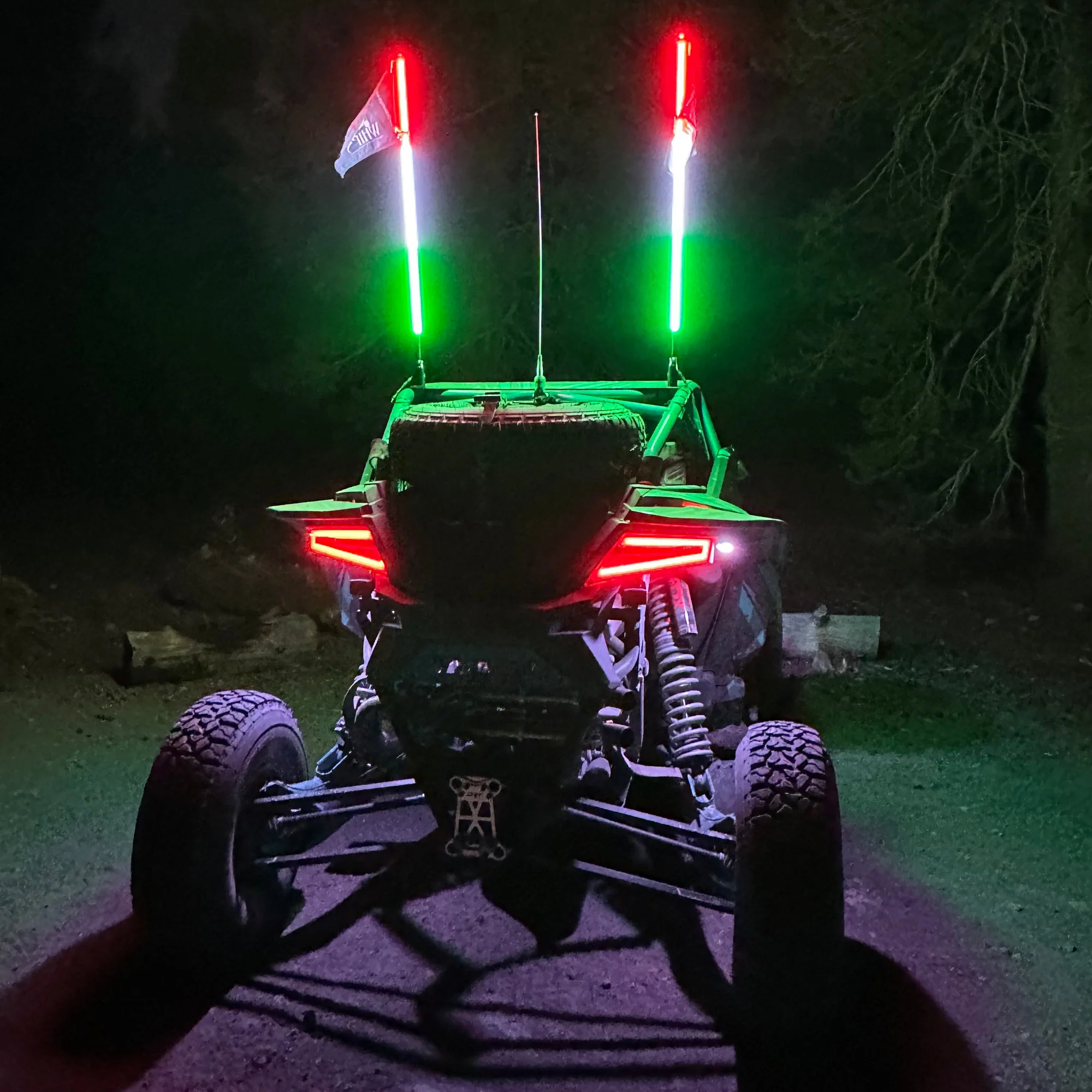
Off-road enthusiasts know that visibility and safety are just as important as suspension, tires, and recovery gear. Whether you’re exploring remote trails, riding across dunes, or joining a group ride after sunset, c provide a practical way to improve vehicle visibility while adding a personalized look. These lighting accessories have become a common addition to UTVs, ATVs, dune buggies, side-by-sides, and off-road trucks because they help other drivers spot your vehicle in challenging terrain. With the right lighting setup, you can ride with greater confidence while making your vehicle easier to identify in changing trail conditions. Investing in quality whip lights also helps prepare your vehicle for a wide range of off-road environments, from open desert landscapes to wooded trails.
At FCK Lightbars, we understand that selecting the right lighting equipment involves more than choosing bright LEDs. Durability, mounting options, weather resistance, and lighting patterns all play an important role in long-term performance. This guide explains how off-road whip lights improve safety, what features matter most, and how to choose a solution that fits your adventures.
Why LED Whip Lights Matter Off the Pavement
Unlike traditional vehicle lighting that primarily illuminates the road ahead, whip lights increase your vehicle’s visibility from multiple directions. This is especially valuable when navigating hills, dunes, wooded trails, or crowded recreational riding areas where sightlines are limited.
Many off-road parks and organized riding events encourage or require highly visible safety flags or illuminated whip systems, particularly during evening rides. Increased visibility helps reduce the risk of collisions while making it easier for riding groups to stay together.
Beyond safety, LED whip lights allow owners to customize their vehicles with programmable colors, patterns, and lighting effects that reflect their individual style. They also enhance the riding experience by making your vehicle stand out at group outings and recreational events. Choosing dependable whip lights can provide added peace of mind, allowing you to focus more on the trail and less on visibility concerns.
Key Benefits of Off-Road Whip Lights
Modern LED whip lights offer several advantages over older lighting technologies.
Improved Visibility
High-output LEDs remain visible over long distances, helping nearby drivers identify your vehicle even in dusty, foggy, or low-light conditions.
Built for Harsh Conditions
Quality whip lights are engineered to withstand:
- Constant vibration
- Mud and water exposure
- UV radiation
- Extreme temperatures
- Trail impacts
Many premium models feature flexible construction that bends rather than breaks when encountering branches or obstacles.
Low Power Consumption
LED technology produces bright illumination while consuming relatively little electrical power. This allows riders to enjoy long operating times without placing unnecessary strain on the vehicle’s electrical system.
Features to Look for When Choosing LED Whip Lights
Not every lighting system performs the same. Paying attention to construction quality helps ensure reliable operation during demanding rides.
Flexible Construction
Flexible whip poles absorb impacts better than rigid designs, reducing the likelihood of permanent damage.
Waterproof Protection
Off-road environments expose lighting equipment to water crossings, rain, snow, and mud. Look for products with appropriate waterproof ratings designed for outdoor use.
Bright LED Output
Higher-quality LEDs provide consistent brightness while maintaining long operational life.
Programmable Lighting Modes
Many systems now include:
- Multiple colors
- Flash patterns
- Music synchronization
- Remote controls
- Smartphone app compatibility
These features make customization easy while allowing riders to adapt lighting to different environments.
Strong Mounting Hardware
Reliable mounting brackets help minimize vibration and maintain stability on rough terrain.
Selecting the Right Height
Whip height depends largely on the type of vehicle and riding environment.
General recommendations include:
- 4-foot whips for smaller ATVs
- 5- to 6-foot whips for many UTVs
- 6-foot or taller options for dunes and highly visible group riding
The goal is to keep the light visible above surrounding terrain without interfering with vehicle operation.
Installation Tips
Installing LED whip lights is generally straightforward, but careful planning improves long-term reliability.
Consider these best practices:
- Secure wiring away from moving suspension components.
- Use waterproof electrical connections.
- Install an appropriately sized fuse.
- Confirm that the mounting hardware is tightened according to the manufacturer’s recommendations.
- Test all lighting modes before heading onto the trail.
Routine inspections help identify loose hardware or damaged wiring before they become larger issues.
Maintaining Long-Term Performance
Proper maintenance extends the lifespan of your lighting system.
Simple maintenance includes:
- Cleaning lenses after muddy rides
- Checking electrical connectors for corrosion
- Inspecting flexible sections for excessive wear
- Tightening mounting hardware periodically
- Replacing damaged wiring promptly
Although LEDs require relatively little maintenance, regular inspections help ensure dependable operation throughout every riding season.
Safety Considerations
Decorative lighting should never distract from safe vehicle operation.
Before using programmable lighting on public roads or organized riding events, always verify local regulations regarding:
- Allowed colors
- Flashing patterns
- Brightness restrictions
- Required safety flags
Organizations such as the Consumer Product Safety Commission continue to emphasize proper equipment maintenance and responsible operation of recreational vehicles as important parts of rider safety.
Choosing Quality Over Price
Lower-priced lighting products may appear attractive initially, but construction quality often determines long-term value.
Premium LED whip lights typically offer:
- Better waterproof sealing
- Higher-grade LEDs
- More durable wiring
- Stronger flexible materials
- Better resistance to vibration
- Longer service life
Investing in reliable equipment often reduces replacement costs over time while providing more consistent performance during demanding rides.
Final Thoughts
Whether you’re navigating rocky trails, exploring wooded paths, or riding across open dunes, LED whip lights contribute to both visibility and vehicle personalization. Choosing high-quality off road whip lights built for demanding environments helps improve reliability and support safer group riding experiences. With the right lighting system, you can approach every adventure with greater confidence while making your vehicle more visible to fellow riders. Investing in dependable whip lights is a practical way to support both safety and long-term off-road enjoyment.
At FCK Lightbars, we focus on lighting solutions designed for real off-road conditions. By selecting durable components, installing them correctly, and maintaining them regularly, riders can enjoy dependable illumination that performs ride after ride. Whether you’re upgrading a new build or improving an existing setup, quality lighting can make every off-road journey more enjoyable and dependable.





Leave a Reply