
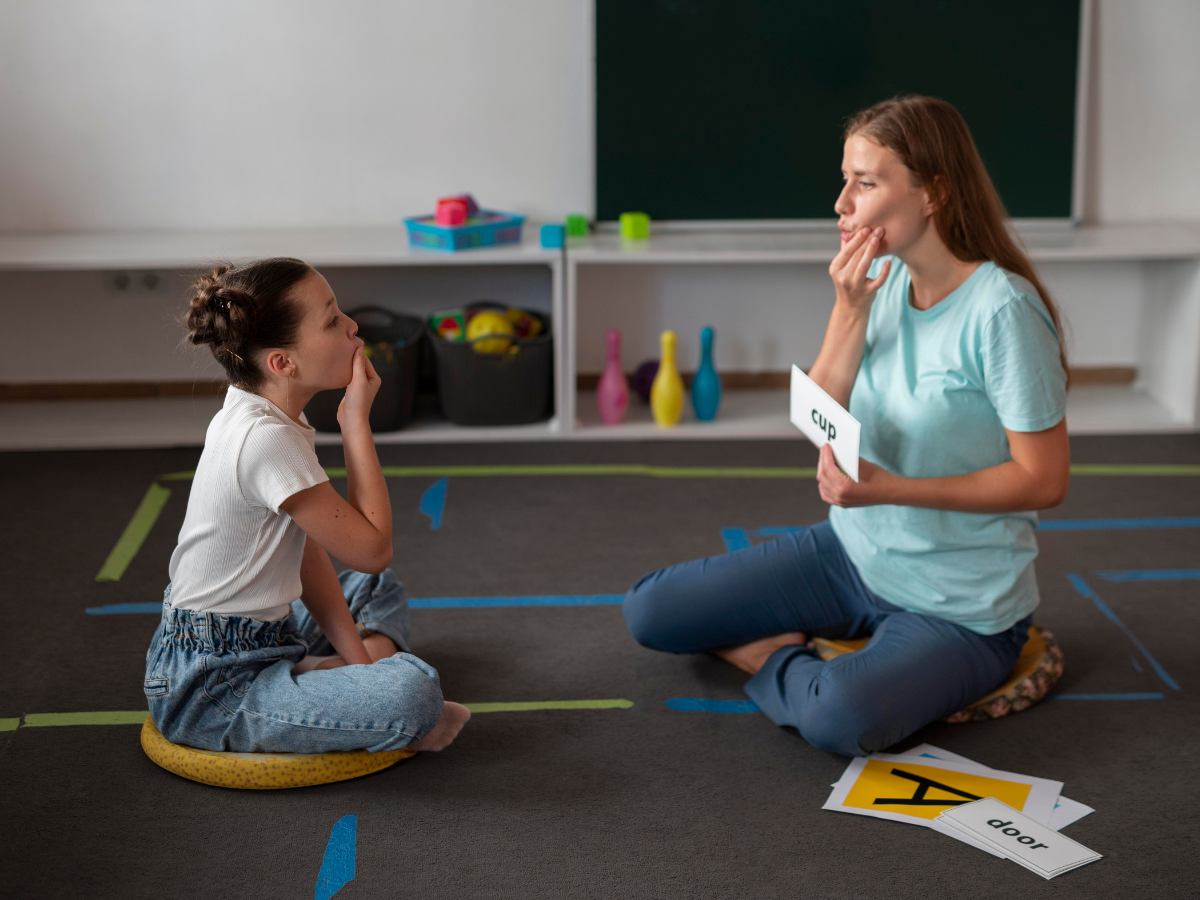
Communication is one of the most important skills a child develops. From expressing needs to building friendships and succeeding in school, strong speech and language abilities influence nearly every aspect of daily life. When communication challenges arise, speech therapy for kids provides individualized support that helps children develop the skills they need to communicate with confidence.
Delivered by qualified speech-language pathologists (SLPs), therapy is tailored to each child’s individual needs and may address speech sounds, language development, fluency, voice, or social communication skills. The goal is to help children communicate more effectively at home, in school, and within their community. At Kool KATTS, therapy programs are designed to meet each child’s unique communication needs while working closely with families to support continued progress. Combined with consistent support from families, early intervention can contribute to meaningful improvements in communication and overall development.
Why Communication Skills Matter in Childhood
Communication begins developing long before a child speaks their first words. As children grow, they learn to understand language, build vocabulary, express ideas, and interact with others. These foundational skills influence learning, relationships, and everyday participation.
Strong communication skills help children:
- Express their thoughts, feelings, and needs
- Build positive relationships with family and peers
- Participate confidently in classroom activities
- Develop early literacy skills such as reading and writing
- Build independence and self-confidence
When speech or language challenges affect communication, children may experience frustration or difficulty participating in everyday activities. Identifying concerns early allows families to access appropriate support during important stages of development.
Understanding Speech and Language Differences
Although the terms are often used together, speech and language describe different aspects of communication.
Speech
Speech refers to the physical production of sounds that form words. Some children may have difficulty pronouncing certain sounds, speaking clearly, or speaking fluently.
Examples include:
- Speech sound disorders
- Stuttering
- Voice disorders
- Motor speech disorders
Language
Language refers to understanding and using words to communicate ideas. Language challenges may affect a child’s ability to:
- Understand instructions
- Build vocabulary
- Form sentences
- Answer questions
- Participate in conversations
- Tell stories
A speech-language pathologist evaluates these communication areas to determine the most appropriate therapy approach.
Signs a Child May Benefit from Speech Therapy
Every child develops at their own pace, but some communication concerns may benefit from professional assessment.
Parents and caregivers may notice that a child:
- Is difficult for others to understand
- Uses fewer words than expected for their age
- Has trouble following simple directions
- Struggles to pronounce certain speech sounds
- Becomes frustrated when trying to communicate
- Has difficulty forming sentences
- Avoids speaking in social situations
- Finds it challenging to participate in conversations
An assessment by a speech-language pathologist can identify a child’s strengths and determine whether therapy would be beneficial.
How Speech Therapy for Kids Supports Development
Every child has unique communication strengths and needs. Speech therapy is individualized to help children build skills that support everyday communication.
Speech Sound Development
Speech sound therapy helps children learn to produce sounds more clearly so they can be understood by others. An SLP identifies which sounds need improvement and provides structured practice that gradually progresses from individual sounds to words, sentences, and everyday conversations.
Therapy may include:
- Listening to and identifying speech sounds
- Practising correct sound production
- Using target sounds in words and sentences
- Applying new skills during natural conversations
Language Development
Language therapy focuses on helping children understand and use language effectively. Depending on the child’s needs, therapy may strengthen:
- Vocabulary development
- Understanding directions
- Sentence structure
- Storytelling skills
- Answering and asking questions
- Following conversations
These skills support communication at home, in school, and during social interactions.
Social Communication Skills
Some children need support using language appropriately during social situations. Therapy may help children learn how to:
- Begin and maintain conversations
- Take turns when speaking
- Understand facial expressions and body language
- Stay on topic during discussions
- Build positive interactions with peers and adults
Fluency Support
For children who stutter, speech therapy focuses on improving communication confidence while teaching strategies that encourage smoother speech. Therapy also helps families create supportive communication environments that reduce pressure during conversations.
Speech Therapy Activities for Kids at Home
Parents and caregivers play an important role in supporting communication development. While home activities do not replace professional therapy, they can reinforce skills introduced during sessions and create natural opportunities for children to practise communication throughout the day.
Read Together Every Day
Reading books encourages vocabulary development, listening comprehension, and conversation.
Ask questions such as:
- What happened first?
- What do you think will happen next?
- Why did the character do that?
- Can you describe this picture?
Encourage Play-Based Learning
Play creates natural opportunities for communication.
Examples include:
- Pretend play
- Building blocks
- Toy animals
- Dolls
- Board games
These activities encourage requesting, describing, problem-solving, and storytelling.
Talk During Daily Routines
Everyday activities provide valuable opportunities for communication practice.
Encourage children to:
- Describe their day
- Explain how something works
- Make choices using complete sentences
- Ask questions
- Tell simple stories
Sing Songs and Nursery Rhymes
Songs and rhymes help children develop listening skills, sound awareness, memory, and vocabulary while making communication enjoyable.
Use Picture Naming Activities
Looking at family photos, books, or picture cards encourages vocabulary growth and helps children build longer sentences.
The Importance of Early Intervention
Communication difficulties can affect learning, social interaction, and everyday activities. Identifying concerns early allows children to receive support during important stages of development.
Early intervention often helps children develop communication skills more efficiently, although speech therapy can benefit children of many ages. Receiving the right support at the right time may improve participation at home, school, and in the community.
What Happens During Speech Therapy Sessions?
Speech therapy sessions are planned around each child’s age, abilities, interests, and communication goals. After an assessment, the speech-language pathologist develops an individualized treatment plan and monitors progress over time.
For younger children, therapy often includes play-based activities because they encourage natural communication while targeting specific speech and language goals.
Sessions may involve:
- Interactive games
- Books and storytelling
- Picture cards
- Toys and pretend play
- Structured conversations
- Problem-solving activities
As children develop new skills, therapy activities become more challenging to encourage continued progress.
Supporting Progress Outside Therapy
Children make the greatest progress when families consistently reinforce communication skills at home.
Parents and caregivers can help by:
- Speaking clearly and at a comfortable pace.
- Giving children enough time to respond.
- Expanding on what children say instead of correcting every mistake.
- Encouraging conversation during everyday routines.
- Reducing distractions during conversations.
- Celebrating effort and progress.
Consistent practice across home, school, and therapy settings provides children with more opportunities to strengthen communication skills.
Choosing Professional Speech Therapy Services
Selecting the right speech therapy provider involves more than finding convenient appointment times. Families should look for professionals who:
- Conduct comprehensive communication assessments
- Develop individualized therapy plans
- Use evidence-based treatment approaches
- Communicate regularly with parents and caregivers
- Monitor measurable progress
- Create engaging, child-friendly therapy sessions
Collaborative care between therapists, families, and educators helps children achieve meaningful communication outcomes.
Final Thoughts
Strong communication skills help children express themselves, build relationships, participate in learning, and gain confidence in everyday life. When communication challenges arise, early assessment and individualized support can make a meaningful difference.
Professional speech therapy for kids uses evidence-based approaches to strengthen speech, language, fluency, and social communication skills while supporting long-term development. Consistent practice at home, including age-appropriate communication activities, can reinforce the skills children learn during therapy and encourage continued progress.
Families seeking personalized pediatric therapy services can contact Kool KATTS to learn more about individualized programs designed to support each child’s communication and developmental needs.
Kool Katts
Business Address: Level 4, 460 Church Street, Parramatta, NSW 2150, Australia
Business Phone Number: 02 9129 2866
Website Link: https://koolkatts.com.au/contact/





Leave a Reply